Conversations/Path D
Path: civic life
A season of 4–6 gatherings · Local institutions, boards, congregations, councils
A town, a house of worship, or a board does not need a thousand concerns. It needs a way to talk about power, rights, and public information together.
Opening question
What decision in this place is already being shaped by a system we do not govern?
To hold together
- What would public accountability look like for a tool we did not buy, but live under?
- How do we talk about distant, severe risk without abandoning the harm that is already here?
- Who is missing from the table that writes the next policy?
A practice
Take one local policy or one news event. Place it on the Flow view. Write the three families it touches. That is the agenda for the next meeting.
Concerns to name in the room
Voter-intimidation content
AI-assisted voter intimidation uses fabricated threats or apparent authority to make people afraid to participate in an election.
Youth and future-generations representation
AI governance can overlook young people and future generations when decisions prioritize current adult interests and short-term results.
Predictive policing
Predictive-policing feedback is a cycle in which past police activity helps direct future patrols, which then generate more records from the same places.
Principles to sit beside the facts
Justice
Who is heard, who is harmed, and who decides.
Accountability
Name who holds the consequence before it is needed.
Solidarity
The parent and the CISO are equally served.
Courage
Act without the comfort of certainty.
Read or watch beforehand
One piece is enough. Save the rest for later.
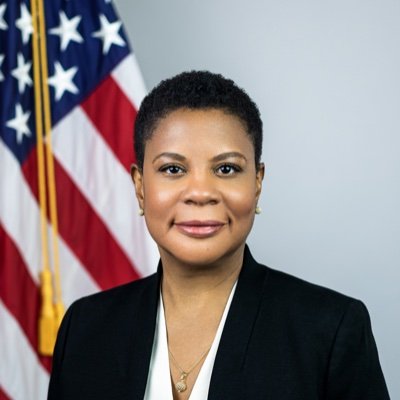
Alondra Nelson
Former deputy director, White House OSTP · Institute for Advanced Study
Shepherded the Blueprint for an AI Bill of Rights. A civic starting point for rights language without requiring a legal training.
Photo credit
Executive Office of the President of the United States · Public domain (US government). Displayed in a circular crop; the photo retains its stated license.

Renée DiResta
Writer and researcher · Formerly Stanford Internet Observatory
Traces how influence operations, rumor, and now generative media move through networks. Useful when a group wants facts about manipulation, not vibes.
Photo credit
Patrick Farrell / Knight Foundation · CC BY-SA 2.0. Displayed in a circular crop; the photo retains its stated license.
International Committee of the Red Cross
Humanitarian policy on AI
Writes from international humanitarian law, not from product. Essential when a conversation touches conflict, weapons, or civilian protection.
NIST AI Risk Management Framework
Voluntary framework · U.S. National Institute of Standards and Technology
The document many institutions already have to map against. Not a voice in the personal sense, but the shared language of governance conversations.